


Department of Inorganic Chemistry

About
Currently, the Department of Inorganic Chemistry includes the majors of inorganic chemistry, analytical chemistry, and nanochemistry. Since 1992, the Department of Inorganic Chemistry has been accepting MSc students in the majors of analytical chemistry and inorganic chemistry. In 2019, it accepted MSc students in the majors of nanochemistry, and in 2007, it also accepted PhD students in the majors of analytical chemistry and inorganic chemistry. Currently, the Department of Inorganic Chemistry has 47 PhD students (20 in inorganic chemistry and 27 in analytical chemistry) and 66 MSc students (26 in inorganic chemistry, 26 in analytical chemistry, and 14 in nanochemistry). There are also 482 MSc graduates (165 in inorganic chemistry, 302 in analytical chemistry, and 15 in nanochemistry) and 86 PhD graduates (26 in inorganic chemistry, and 60 in analytical chemistry).
Facilities and Equipment
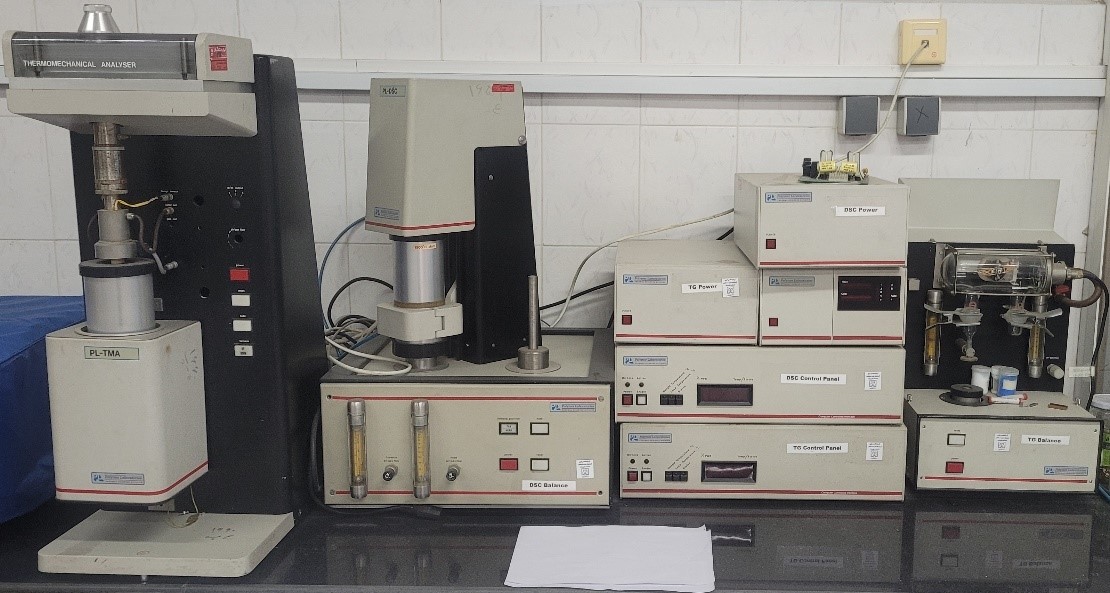
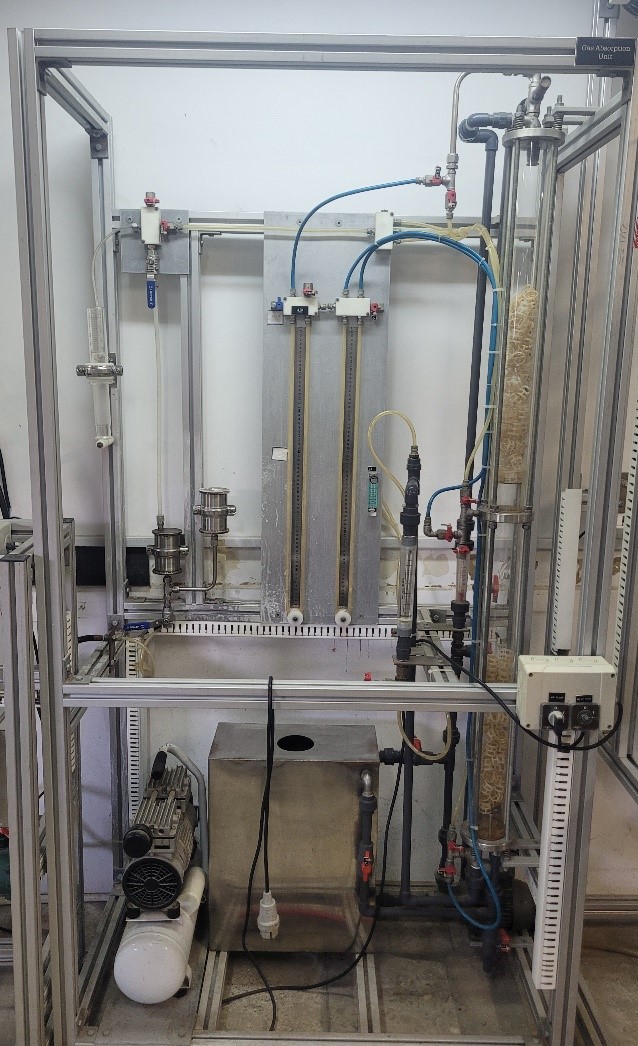
Central Chemistry Lab
The Central Chemistry Laboratory is equipped with a comprehensive range of instruments and facilities designed to support a broad spectrum of chemical research and analytical tasks. Key equipment includes UV-Vis spectrophotometers, FTIR spectrometer, XRD, gas chromatograph (GC), and GC/MS. The laboratory provides the infrastructure necessary for both qualitative and quantitative analysis, enabling fundamental studies as well as advanced research across various fields of chemistry.

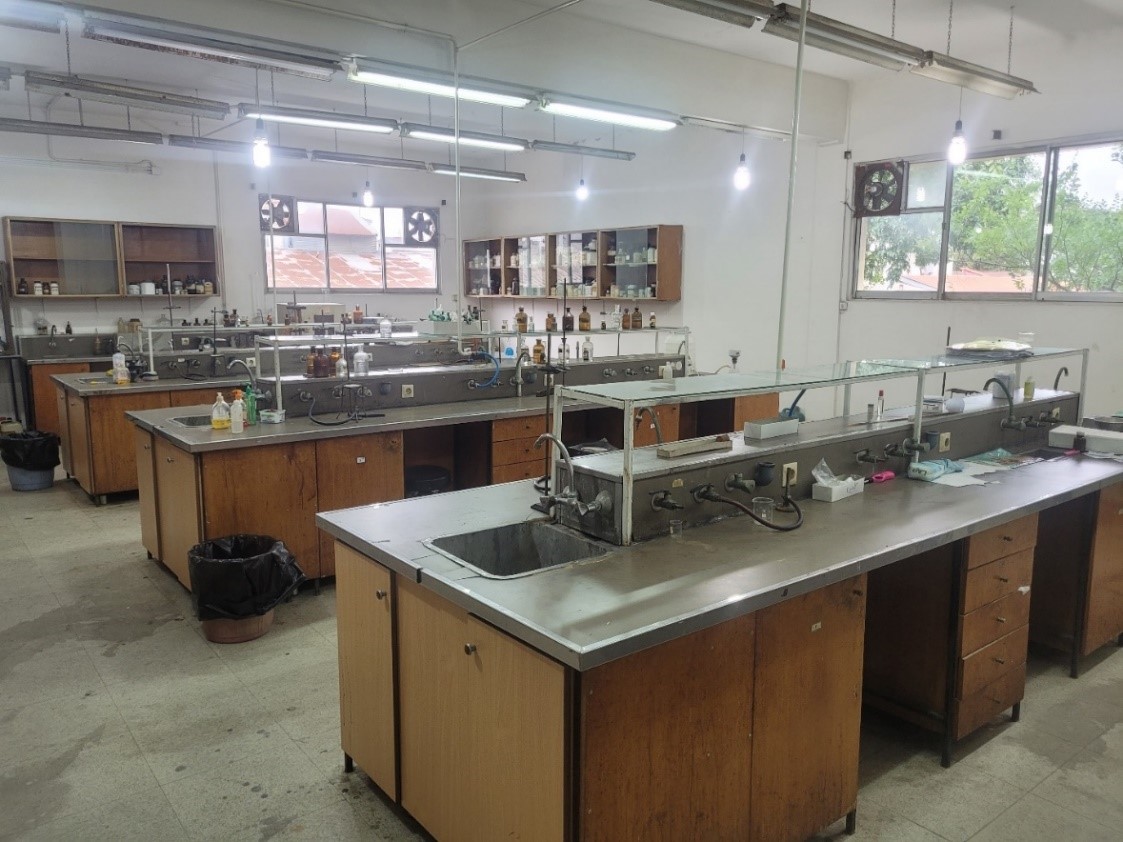
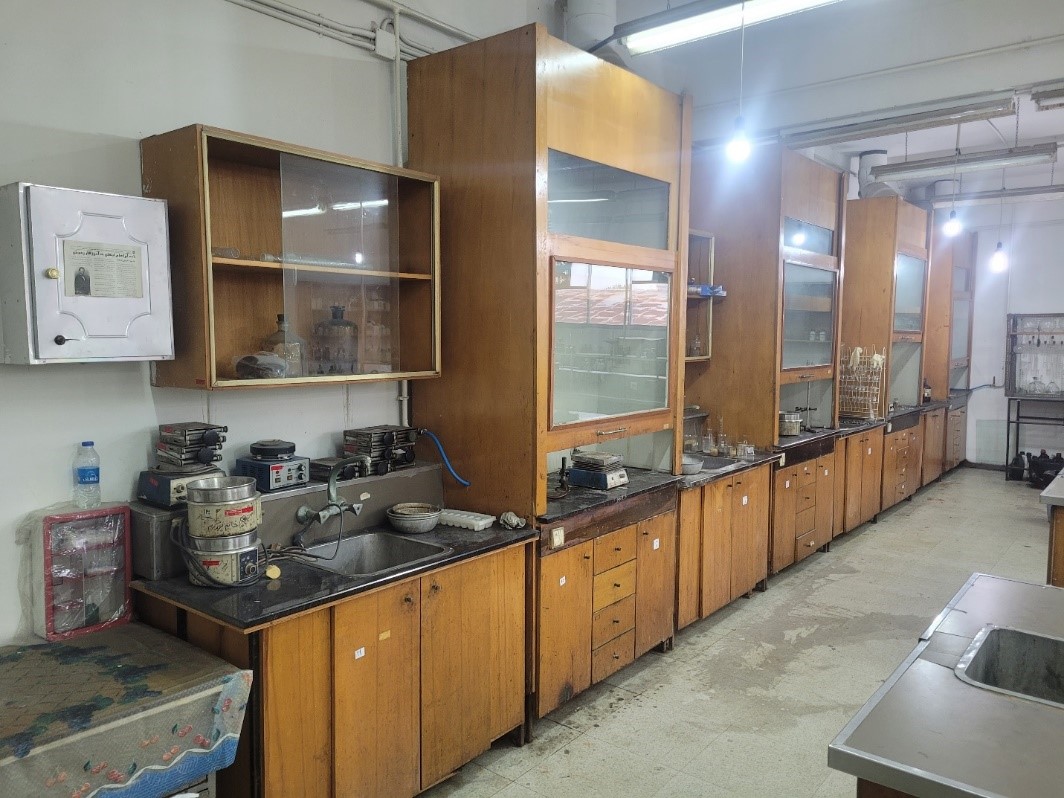
Inorganic Chemistry Lab
The Organic and Inorganic Chemistry Laboratories are equipped with a wide range of instruments and specialized glassware to support the synthesis, purification, and analysis of both organic and inorganic compounds. These laboratories facilitate various experimental techniques such as complexation, crystallization, redox reactions, organometallic synthesis, and catalyst development, supporting both educational and advanced research activities

-
TeachingThe mission of the Department of Inorganic Chemistry is to advance scientific understanding through pioneering research and to prepare students for leadership roles in inorganic and analytical chemistry and related fields. Our department focuses on the development of innovative analytical techniques, the exploration of inorganic chemical systems, and the design and application of nanomaterials.
We are committed to delivering a rigorous and comprehensive education that fosters critical thinking, ethical scientific conduct, and a spirit of innovation. Our faculty members are dedicated to supporting students in developing the skills necessary for life-long learning and interdisciplinary collaboration.
The department is a vibrant hub of discovery and innovation. Our research and academic programs emphasize the integration of advanced analytical methods, the chemistry of materials and coordination compounds, and cutting-edge developments in nanoscience, contributing to technological progress and solutions to real-world challenges.
-
ResearchOur faculty members are researchers with expertise in various areas of inorganic, analytical, and nanochemistry. Many are dynamic and innovative scientists who bring advanced analytical tools and cutting-edge research into the classroom, enriching the learning experience with real-world chemical applications.
Main Research Areas
• Synthesis and characterization of inorganic and coordination compounds
• Development of advanced analytical techniques
• Environmental and industrial analytical chemistry
• Nanomaterials and their chemical applications
• Catalysis and functional materials
• Electrochemistry and sensor development
• Spectroscopic and structural analysis methods
•Applications of nanochemistry in energy, health, and environment
-
PublicationPublication